
The Problem
I photograph the night sky. For years, I planned sessions by clicking through dates one at a time in various apps. Want to find the best night in April? Click through 30 dates. Planning a trip in three months? Click through 90 dates.
It was tedious. So I built something better.
The Solution
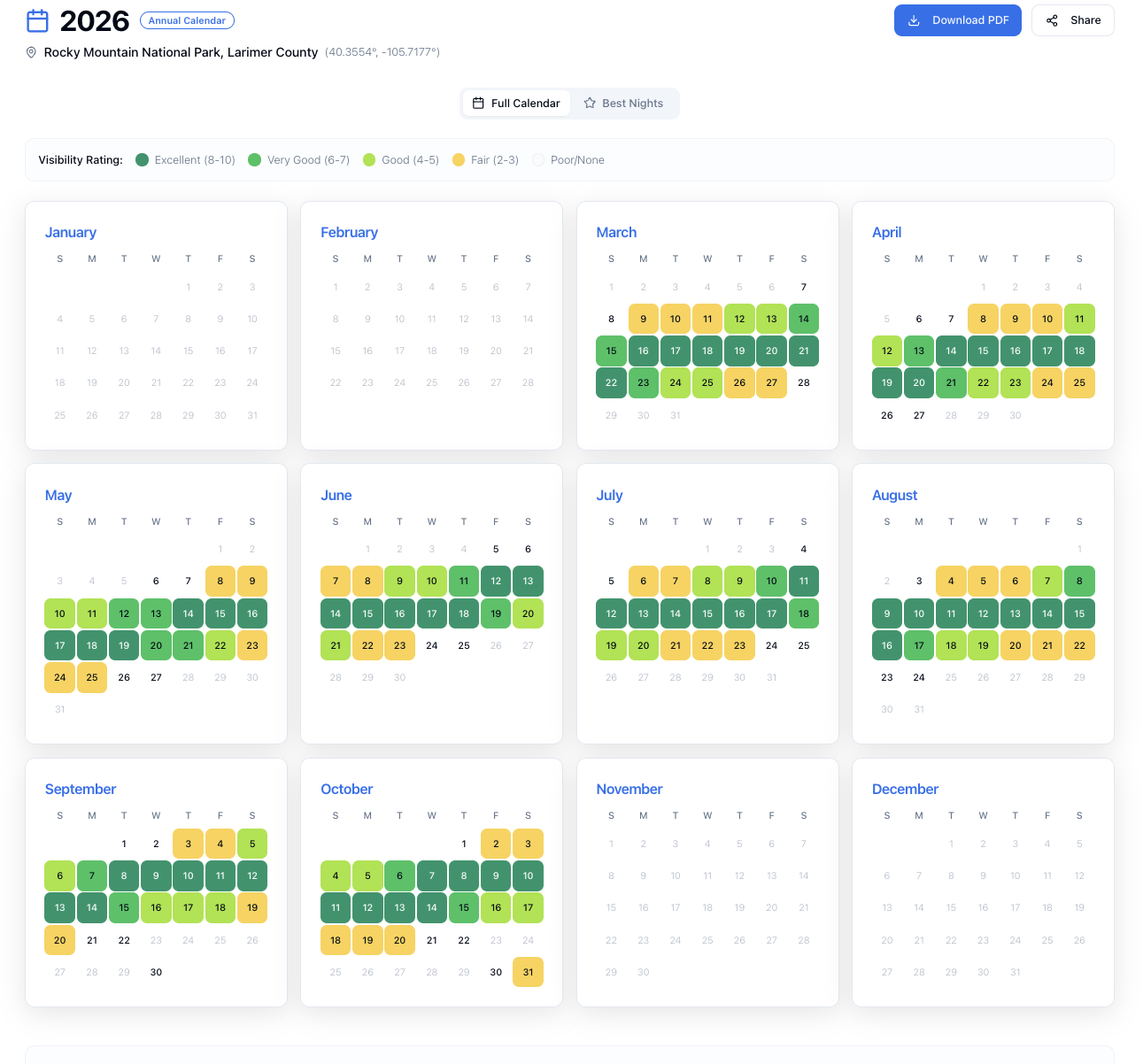
MilkyWayPlanner.com shows your entire Milky Way season on a single screen. You can scan months of visibility data in seconds and identify your best shooting windows without the date-by-date grind.
How It Works
Enter any location worldwide. Select a year. The tool generates a color-coded calendar showing conditions for every night.
Green means excellent. Dark, moonless skies with good galactic core visibility. Yellow means fair conditions. Gray means skip it.
A detailed table breaks down the best nights with exact timing: sunrise, sunset, moonrise, moonset, and the window when the Milky Way core will be above the horizon.
Free Annual Calendars
Anyone can create a personalized 12-month Milky Way calendar for their location. It takes about a minute.
Each calendar gets a unique shareable URL. Download a PDF to print and take into the field. Share the link with your photography group to coordinate outings.
The free calendar is the core of what MilkyWayPlanner.com does. Most photographers start here.
Premium Features
For $25 per year, premium adds three things:
Moon Planner
Moonrise and moonset times with compass directions. Supermoon tracking. Twilight data for dramatic moon shots against colorful skies.
Trip Planner
Build multi-stop itineraries for dark sky road trips. See visibility conditions for each stop on your specific travel dates. Export everything to your calendar.
Full Exports
Excel spreadsheets with complete astronomical data. ICS files that sync with Google Calendar, Apple Calendar, or Outlook.
See It In Action
Annual calendar with color-coded visibility ratings
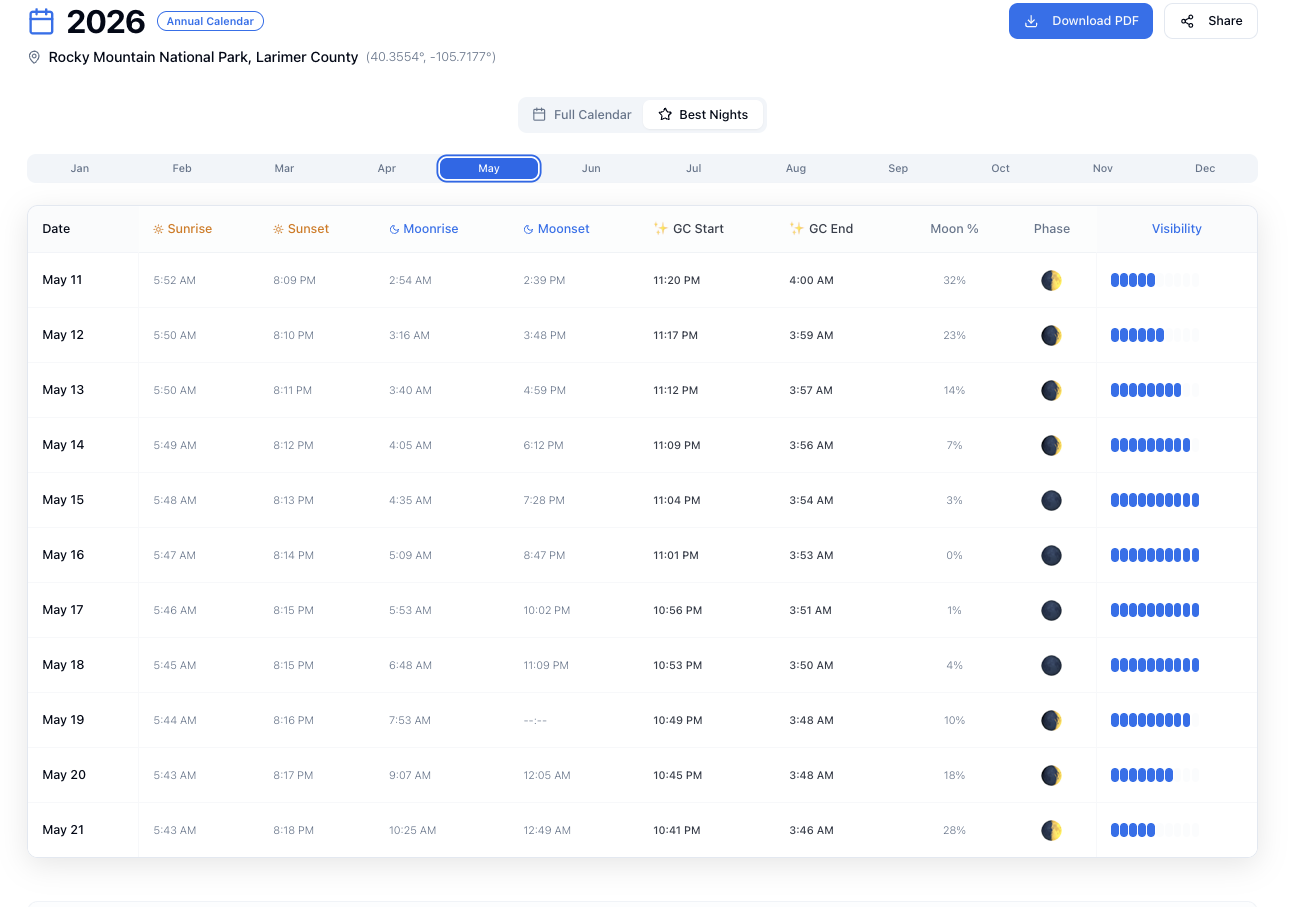
Detailed table with exact timing for best nights
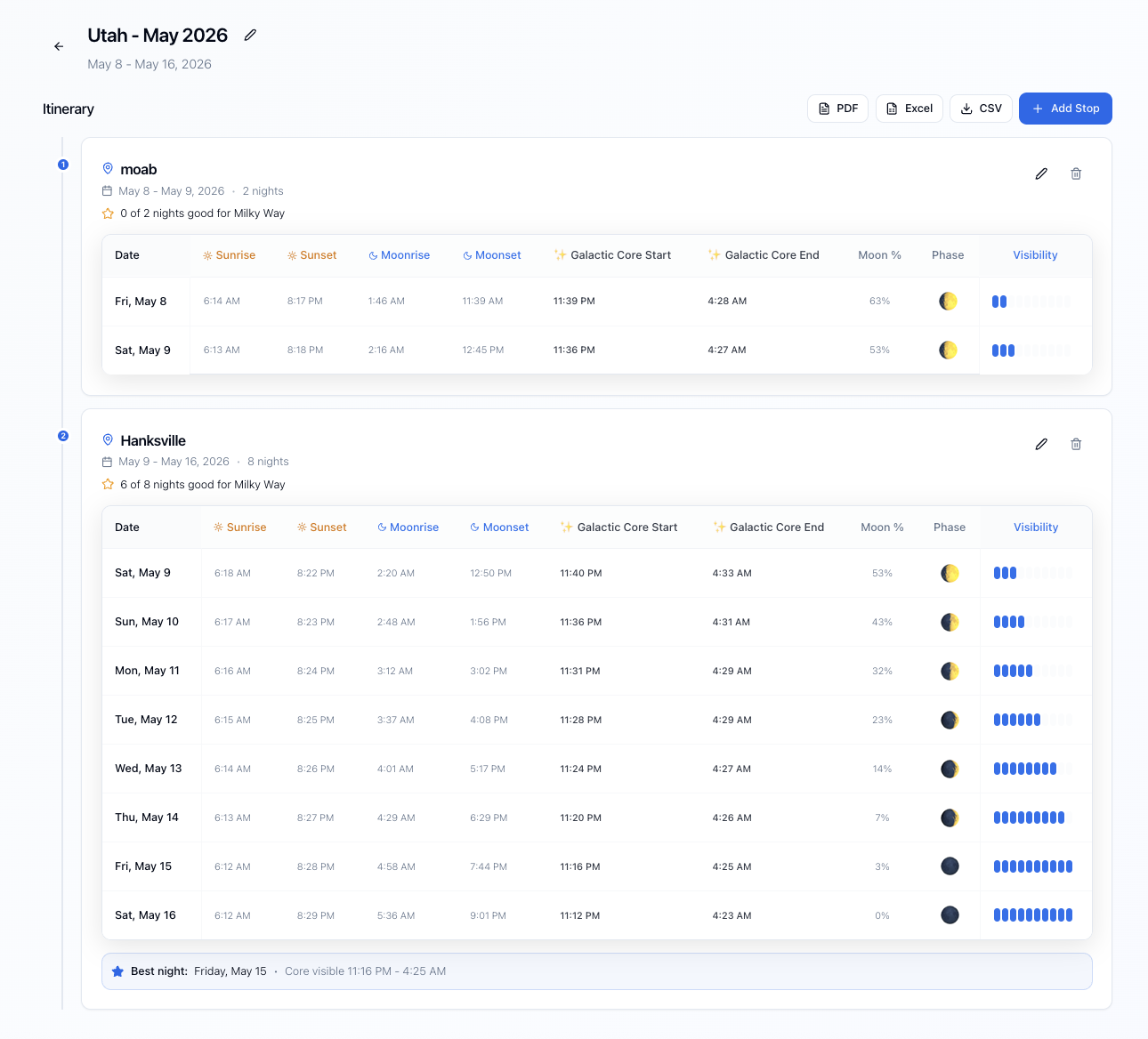
Trip planner for dark sky road trips
Why I Built This
I wanted to see an entire season at once. Which weekends have new moon conditions? What is my backup if weather kills my primary session? When does the galactic core reach the right position for a specific composition?
These questions are hard to answer when you are clicking through dates one at a time. They become obvious when you can see months of data on a single screen.
I built the tool I wished existed. Now other astrophotographers use it too.
Try It
Create a free annual calendar at MilkyWayPlanner.com. Enter your location, pick your year, and see your entire Milky Way season in about 60 seconds.